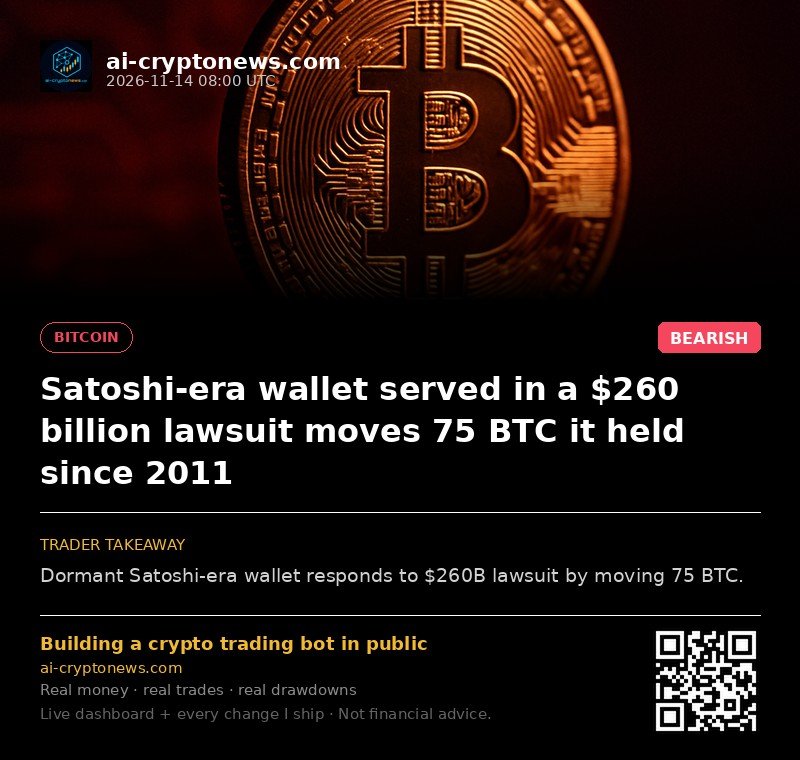
📉 BEARISH OUTLOOK
A Bitcoin wallet that has been completely silent since 2011 just woke up and moved money. That does not happen by accident, and the timing here is very suspicious.
A wallet from the so-called "Satoshi era" (the very early days of Bitcoin, when only a handful of people were using it) recently moved 75 BTC, worth roughly $5 million. This wallet had not touched its coins in over a decade, and it is connected to a massive $260 billion lawsuit. You can follow coverage of early Bitcoin wallet activity through Bitcoin.org.
What makes this even stranger is that the transfer also spent a tiny amount of Bitcoin that was sent to this wallet back in May. That tiny payment was not random. It was used by lawyers to officially serve a court notice to the wallet's owner, a method courts have started using to contact people who hide behind anonymous crypto addresses. So someone received that legal notice, and now they are moving funds.
When very old wallets move Bitcoin, it usually spooks the market. Traders get nervous because large amounts of old coins hitting exchanges can push prices down. The sentiment around this move is bearish, meaning analysts think it could add selling pressure to Bitcoin right now.
For everyday Bitcoin holders, this is a reminder that the blockchain is public and permanent. Even coins sitting still for 15 years leave a trail. And if you are ever named in a legal case, courts can and will find creative ways to reach you, including sending payments directly to your wallet.
Keep an eye on whether these 75 BTC move to an exchange, which would suggest the owner plans to sell. If they do get sold, it could add a small but real dip in Bitcoin price. Also watch for any updates on the $260 billion lawsuit itself, since this wallet movement could be a major development in that case.
It could cause short-term selling pressure, which is why the sentiment is bearish. But 75 BTC is not a huge amount compared to daily Bitcoin trading volume, so the effect may be limited.
It is a Bitcoin wallet created in the very early years of Bitcoin, around 2009 to 2012, when the coin was worth almost nothing. Wallets from this period are closely watched because they sometimes belong to early insiders or even Bitcoin's mysterious creator.
Yes, and it is becoming more common. Lawyers send a tiny crypto payment to a wallet with a memo or linked document, and courts accept this as official legal service when the owner cannot be reached any other way.
Access crypto USDT perpetual futures on the world's largest exchange.
🚀 Open Binance Account 📡 More Signals ✈️ Join Telegram