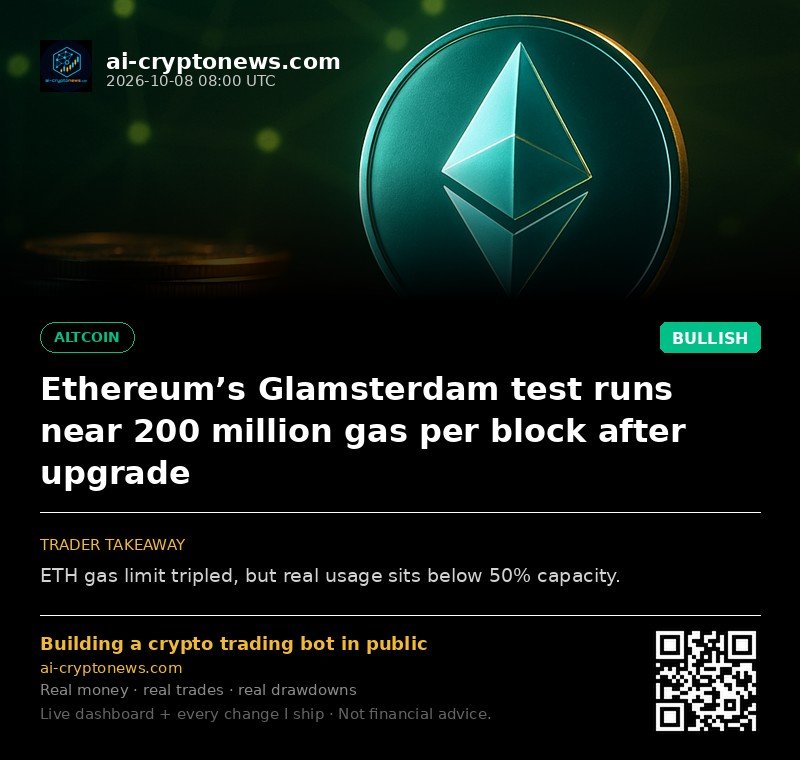
📈 BULLISH OUTLOOK
Ethereum just quietly ran one of its biggest stress tests yet, and the results are pretty interesting. The network handled nearly 200 million gas per block on a test network, and it barely broke a sweat.
Ethereum developers ran a rehearsal of the upcoming Glamsterdam upgrade on Sepolia, which is basically a practice version of the Ethereum network used for testing. The big news is that the gas limit, which is the amount of work the network can process in one block, was raised to nearly 200 million. That is more than three times what it was before.
But here is the interesting part. Even with that much room available, the blocks that were sampled only used less than half of the new limit. You can follow the technical details through the Ethereum Foundation. In plain terms, the network has way more breathing room now, and it was not even close to being pushed to its limits during the test.
Gas is basically the fee you pay to do anything on Ethereum, like sending tokens or using apps. When the network gets congested, gas fees shoot up and everything gets expensive. A higher gas limit means more transactions can fit into each block, which generally pushes fees down and makes the network faster and cheaper to use.
If Glamsterdam rolls out to the main Ethereum network and performs anything like this test, everyday users could see noticeably lower fees. That is good news for anyone who has ever been put off by paying $20 to move a few dollars worth of crypto.
The Sepolia test went well, but a test network is not the real thing. Developers will keep monitoring the results and likely run more rehearsals before the upgrade goes live on mainnet. Watch for official announcements from the Ethereum core team on timing and any changes based on what they learn from these tests.
Glamsterdam is an upcoming Ethereum network upgrade designed to increase how much the network can process at once. It is part of Ethereum's ongoing effort to become faster and cheaper for users.
A higher gas limit generally creates more room for transactions, which can reduce fees when the network is busy. Analysts think it should help, but real-world results depend on how much demand there is once the upgrade goes live.
More capacity and lower fees tend to attract more users and developers to the network, which is generally a positive signal. That said, upgrades alone do not guarantee price movements.
Access crypto USDT perpetual futures on the world's largest exchange.
🚀 Open Binance Account 📡 More Signals ✈️ Join Telegram