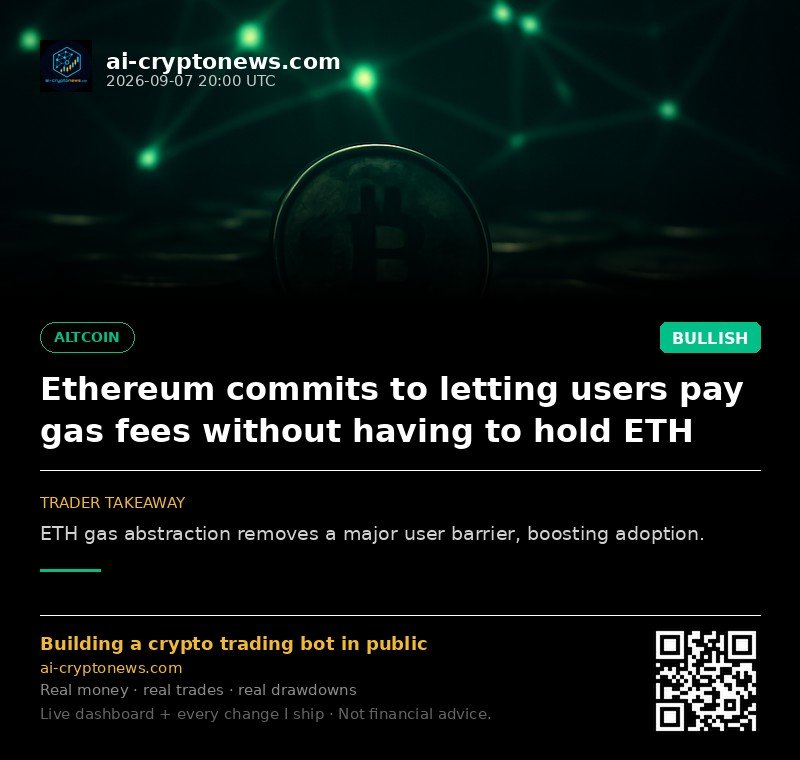
Ethereum has officially committed to letting users pay gas fees without holding ETH, a major upgrade that could reshape how everyday people interact with the world's second-largest blockchain. The **Frame Transactions** feature was locked into the **Hegotá upgrade** last month, and Ethereum co-founder Vitalik Buterin says the technical work has moved quickly since that milestone.
This is not a hypothetical roadmap item anymore. The core development team has shifted from planning to execution, and the implications for user adoption and the broader crypto market are significant. For years, the requirement to hold ETH for gas has been a barrier to entry; this change removes that friction entirely.
WHAT HAPPENED
The **Hegotá upgrade**, which was finalized in August, formally includes the technical specifications for **Frame Transactions**. This mechanism allows users to pay network fees using alternative assets, such as stablecoins like USDC or DAI, effectively decoupling the cost of using the network from the necessity of holding its native token.
According to statements from the Ethereum Foundation, the protocol-level changes are designed to create a "paymaster" system. This system can absorb the gas cost on behalf of the user and settle the transaction in a different token. Buterin confirmed that the coding efforts have accelerated since the feature was locked in, suggesting that the network is moving toward a more user-friendly era where the native asset is not a prerequisite for activity.
The shift is a direct response to the persistent complaints from new users who find the process of acquiring ETH—often through a centralized exchange—too cumbersome. By allowing gas fees to be paid in other digital assets, Ethereum is effectively removing a significant hurdle that has historically driven potential users toward faster and cheaper alternative chains.
WHY THIS MATTERS FOR CRYPTO
This development is a bullish signal for the entire Ethereum ecosystem because it addresses the single biggest UX failure point in crypto: the "gas problem." New users frequently abandon wallets when they realize they need to buy a specific coin just to move another coin. By allowing gas to be paid in stablecoins, Ethereum is positioning itself as a more practical network for daily transactions and institutional adoption.
From a market perspective, this could paradoxically increase the value of ETH over the long term. While it reduces the *forced* buying pressure for gas, it dramatically increases the utility and throughput of the network. More transactions mean more burned ETH (due to the EIP-1559 mechanism), which could create a supply shock even if the demand for the asset as a utility token shifts.
Furthermore, this move puts pressure on competitors like Solana and Avalanche, which have long marketed their low fees and lack of friction. If Ethereum can offer a similar experience without requiring users to hold the native asset, the competitive advantage of these alternative layer-1 networks diminishes significantly. The market is likely pricing in a future where Ethereum captures a larger share of the institutional and retail payment flow.
WHAT TRADERS SHOULD WATCH
Traders should monitor the **testnet deployment schedule** for Frame Transactions over the next few months. The speed at which the code moves from the Hegotá specification to a live test environment will be a key indicator of whether the network can ship this feature by the end of the year. Any delays in the testing phase could create short-term bearish sentiment for ETH.
Additionally, watch the activity of the **Ethereum Foundation** and the core developer calls. Buterin's recent comments suggest a sense of urgency, but the community still needs to vote on the final implementation details. A smooth transition to testnet, followed by a successful security audit, would likely trigger a rally in ETH and related layer-2 tokens.
On the macro side, keep an eye on the **CFTC** and other regulatory bodies. As Ethereum moves toward a model where gas can be paid in stablecoins, regulators may view the network more like a financial settlement layer rather than a speculative asset. This classification shift could influence institutional investment strategies and open the door for regulated futures products tied to network usage rather than just token price.
MARKET SENTIMENT ANALYSIS
The current sentiment surrounding this news is **BULLISH**, driven by the tangible progress on a feature that has been discussed for years. The market responds well to execution, and the fact that the code is now locked into a scheduled upgrade provides a level of certainty that speculative announcements do not. This is a concrete catalyst, not just a whitepaper promise.
In the short term, we expect volatility to remain elevated as traders position for the testnet launch. However, the long-term outlook is decidedly positive. If successful, this upgrade could mark the beginning of a new adoption cycle, bringing millions of non-custodial users into the ecosystem who previously found the technical barriers too steep to overcome.
Frequently Asked Questions
Will this change make ETH worthless?
No. While the demand for ETH as a mandatory gas token may decrease, the demand for ETH as a staking asset and store of value is likely to increase. The upgrade boosts network activity, which increases the amount of ETH burned in transaction fees. This deflationary pressure, combined with the security provided by stakers, ensures ETH retains significant intrinsic value.
When will users be able to pay gas fees with stablecoins?
Based on the current timeline, the Hegotá upgrade is expected to go live on the mainnet in early 2027. However, the specific Frame Transactions feature may require a subsequent fork or client update to be fully activated. Developers have indicated that a public testnet deployment is likely within the next two quarters.
Which tokens will be supported for gas fee payments initially?
The initial rollout is expected to support major stablecoins like USDC, USDT, and DAI. The system is designed to be modular, meaning the Ethereum community can vote to add other high-liquidity assets later. The key criteria for support will be the stability of the token's value to prevent network fee volatility.
Related Articles
⚠️ Not financial advice. This article is AI-generated for informational purposes only. Cryptocurrency trading involves substantial risk. Always do your own research (DYOR) before making any investment decisions.